
Sentiment Analysis
Four Billion Dollars and Nothing to Show for It


Four Billion Dollars and Nothing to Show for It: What Kemerton Reveals About Western Lithium Refining
Albemarle’s decision in early 2026 to shut its Kemerton lithium hydroxide plant in Western Australia, after investing more than $4 billion, crystallizes a pattern that has been building for a decade. Major Western attempts to onshore lithium chemical processing repeatedly fail to reach durable competitiveness, even when backed by generous grants, tax credits, and strategic rhetoric.
This closure did not occur in a demand recession. Fastmarkets’ 2026 outlook points to global lithium demand growth in the order of 15-40% year-on-year, with a significant share of the upside tied to large-scale battery systems for AI data centers and grid balancing. In other words: the market is expanding rapidly, particularly for high-spec lithium hydroxide suited to high-nickel and advanced LFP chemistries.
Yet even with this demand backdrop, Kemerton could not defend its position on the cost curve against Chinese refiners. The facility was effectively priced out of the market by competitors drawing on cheaper energy, lower labor costs, integrated reagent supply, and above all, much larger and denser processing clusters. The outcome is a stranded asset in Western Australia and a reinforced reliance on Chinese midstream for an increasingly strategic metal.
The operational question for the lithium value chain is therefore not whether demand will be there-it already is-but why Western plants like Kemerton remain structurally uneconomic and what that implies for supply security, industrial policy, and project design in the rest of this decade.
Kemerton in Focus: Design, Ambition, and Early Shutdown
Kemerton was conceived as a flagship Western lithium hydroxide monohydrate (LHM) facility, positioned close to world-class spodumene feedstock in Western Australia. Public disclosures and industry reporting describe a phased development: an initial train nominally designed around 24,000 metric tonnes per year (MT/year) of LHM, with later expansion paths toward roughly 50,000 MT/year. Feed would be sourced from hard-rock concentrate, notably from the Greenbushes operation, and processed via conventional alkaline conversion and crystallization routes.
Commissioning began in the early 2020s, with ramp-up stretching over several years. By mid‑decade the plant had achieved meaningful output but never reached nameplate capacity at stable, competitive unit costs. Challenges cited in industry discussions included:
- Energy costs significantly above initial engineering estimates, driven by gas and grid power pricing in Western Australia.
- Labor intensity higher than benchmark Chinese plants, partly due to workforce expectations in a remote, high-wage jurisdiction and constraints on automation.
- Reliance on imported or high-logistics-cost reagents, in contrast with Chinese clusters where sulfuric acid, soda ash, and other inputs are often produced on-site or nearby.
- Difficulty diluting fixed overheads over relatively modest volumes compared with 100,000-200,000 MT/year Chinese refineries.
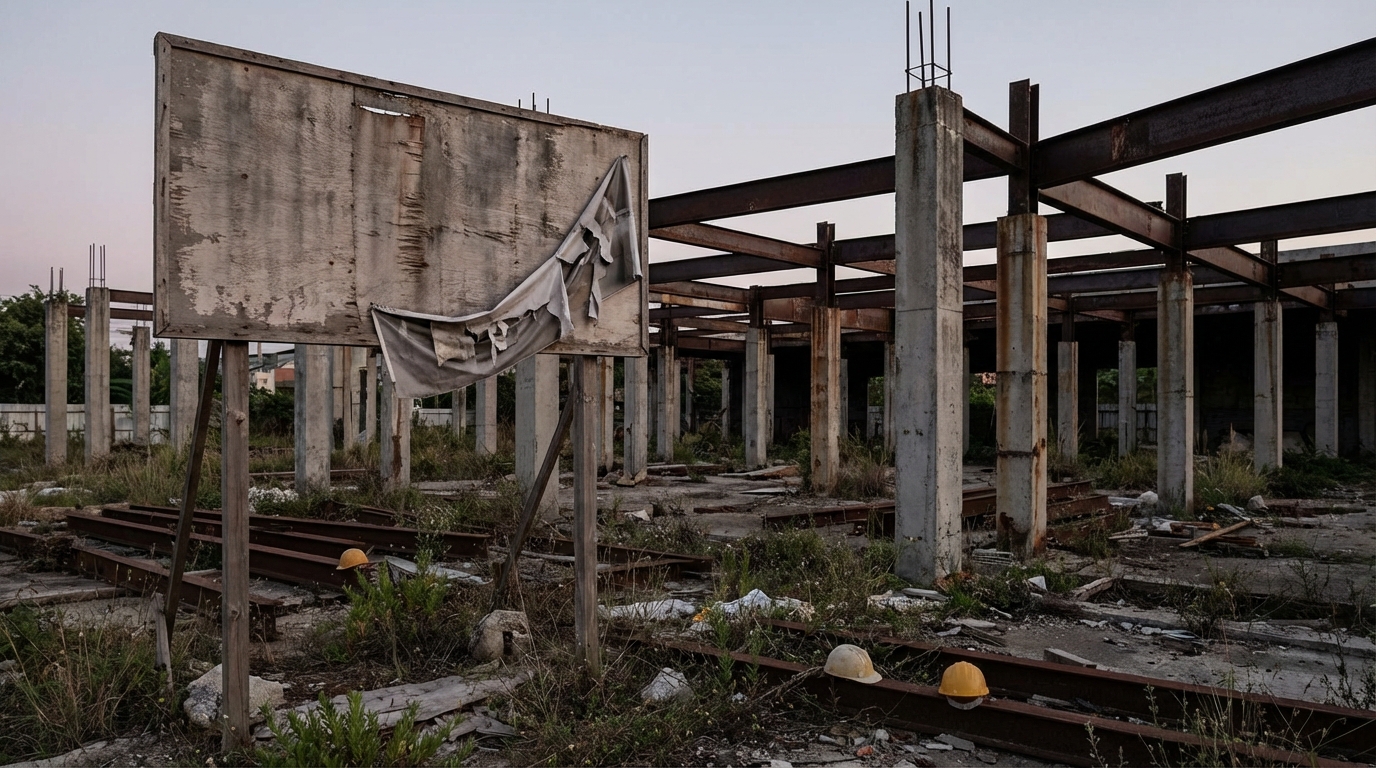
By early 2026, Albemarle elected to suspend and then close operations, taking an impairment on the order of $4 billion associated with Kemerton-related assets. The plant moved to care-and-maintenance, with a residual cost just to keep the facility safe and compliant, but with no clear path back to competitive production under the existing operating environment.
From a technical standpoint, Kemerton did not fail because the chemistry was exotic or unproven. The flowsheet was broadly conventional for hard-rock to hydroxide conversion. The breakdown came where Western projects most often stumble: at the intersection of power tariffs, labor and reagent overhead, and insufficient scale to offset these disadvantages. That is what turns a multi‑billion‑dollar project into a stranded chemical complex even as the underlying commodity remains in secular growth.
Chinese vs Western Lithium Hydroxide Costs: A Structural Gap, Not a Cycle
Market benchmarking for 2025–2026 places Chinese lithium hydroxide plants firmly at the low end of the global cost curve, with many operations clustered in integrated chemical hubs in Jiangxi, Sichuan, and other provinces. Western facilities such as Kemerton, even with subsidies, tend to sit in the upper quartile.
Industry cost breakdowns for representative plants show the gap is not driven by a single factor but by stacked advantages. Chinese plants benefit from lower-cost, more stable industrial energy; cheaper and more flexible labor; vertically integrated or co‑located reagent supply; and, critically, large capacities that spread fixed costs over substantially higher volumes.
Indicative comparative structures—based on 2025–2026 cost benchmarking for a large Chinese refinery versus Kemerton-type Western facilities—look as follows:
| Cost Component | Chinese LHM Hub (Indicative) | Western LHM Plant (Kemerton-Type) | Observed Relationship | Primary Drivers |
|---|---|---|---|---|
| Energy | Lower absolute power and fuel cost per kg, with baseload coal and hydro | Several times higher energy cost per kg, using higher-priced gas and grid power | Roughly 2–3× higher unit energy cost in Western plants | Industrial power tariffs; fuel mix; lack of integrated captive generation |
| Labor | Lean crews per 50–100kt train; wage levels aligned with local manufacturing norms | Higher headcount per tonne and substantially higher wages | Often 4–5× labor cost per kg in Western facilities | Wage differentials; roster structures; union agreements; automation gaps |
| Reagents | Acid, alkali, and auxiliary chemicals often produced in-cluster at low logistics cost | Significant proportion imported or trucked over long distances | Frequently 1.5–2× reagent cost per kg in Western plants | Domestic chemical industry depth; by‑product integration; transport |
| Capex Amortization | Large single-site capacities (100–200kt/year) and high utilization | Smaller trains (20–50kt/year) with slower ramp-up and lower utilization | Capex per kg amortized cost several times higher in Western operations | Scale economies; learning curves; construction cost base |
| Overheads & Compliance | Streamlined local permitting once zones are designated for chemicals | Extensive environmental, community, and safety compliance overheads | Higher fixed overhead per tonne in Western jurisdictions | Regulation depth; reporting requirements; ESG expectations |
In the aggregate, industry data referenced in the prior analysis suggest Chinese lithium hydroxide cash costs in the high single to low double digits per kilogram equivalent, with Western plants more than double that level in many cases. The Kemerton experience, where internal cost estimates were reported well above typical Chinese benchmarks, is consistent with this structural pattern.
Two points are critical. First, this is not simply about wage levels. Energy and reagents alone create a substantial gap. Second, subsidies that touch only initial capital cannot fundamentally alter operating-cost rankings over a plant life measured in decades. A Western refinery built with public support still pays Western power prices, Western wages, and Western reagent logistics for as long as it runs.
Energy as the Hard Constraint: Power-Intensive Chemistry in High-Tariff Systems
Lithium hydroxide production from hard-rock feed is highly energy-intensive. Typical flowsheets entail crushing, calcination or conversion, leaching, impurity removal, concentration, and crystallization. Each major unit operation draws on electrical or thermal energy, with industry benchmarks placing total consumption on the order of many tens of kilowatt-hours per kilogram of finished LHM, depending on feed grade and process design.
Chinese plants often operate with access to low-tariff industrial electricity—frequently coal-based, sometimes supplemented by hydro or other sources. Power prices in major lithium hubs have historically been a fraction of those faced by electro-intensive industries in Western Australia, Europe, or parts of North America. In several documented cases, lithium refiners in China also benefit from preferential tariffs or local support measures as “strategic” industries within provincial plans.
By contrast, Kemerton operated in a power system where wholesale prices reflected a mix of gas-fired generation, growing renewables penetration, and limited baseload coal. When gas prices spiked, or when renewable variability required peaking generation, delivered electricity costs rose materially. For a facility consuming large, relatively inflexible baseload power, this directly translated into volatility and elevation in unit production costs.
Decarbonization policies add another layer. Western jurisdictions increasingly couple power prices with carbon costs, grid charges, and renewable support mechanisms. While these align with climate objectives, they act as a surcharge on every kilowatt-hour consumed by a refinery. Chinese provinces have also set decarbonization goals, but in practice coal capacity and supportive industrial tariffs have been maintained or expanded, providing lower and more predictable energy inputs for midstream chemical plants.
This asymmetry is the crux: lithium hydroxide is an energy-constrained product. Locating electro-intensive refining inside high-tariff, carbon-priced, intermittency-challenged grids creates a baked-in disadvantage versus coal-backed, industry-prioritized grids—even before considering labor or reagents.
Labor and Reagents: High-Cost Inputs in Fragmented Western Ecosystems
Labor and chemical reagents are the next pillars of the structural gap. At Kemerton-scale plants, fixed staffing requirements—from control room operators and maintenance crews to environmental, safety, and administrative teams—are substantial. In Western Australia, wage levels, conditions under national employment law, and the need to attract skilled workers to remote locations drive a high labor cost base.
Industry comparisons cited in prior analyses suggest that for roughly comparable output volumes, Chinese plants have operated with fewer employees and substantially lower average wages, resulting in per‑kilogram labor costs several times lower than at Kemerton-style facilities. Differences in automation, tolerance for manual operations, and workforce rostering all play a role, but the central fact is that refined chemical production has been sited in regions where manufacturing labor is priced accordingly.
Reagents reinforce this disparity. Lithium hydroxide production relies heavily on acids (often sulfuric), alkalis (such as soda ash or lime), and a suite of process chemicals. Chinese lithium hubs are frequently embedded within or adjacent to extensive chemical industry clusters. Sulfuric acid can be a by‑product of metals or phosphate production; soda ash and lime are sourced from nearby integrated plants; freight distances are short; and intermediates may be transferred via pipelines or dedicated rail.
In Western Australia, by contrast, critical reagents often travel long distances by truck or ship. Pricing reflects not only global commodity values but freight, handling, and storage in relatively small and dispersed markets. The result, as reflected in cost benchmarking, is reagent cost per kilogram of lithium hydroxide commonly 1.5–2 times the Chinese level—again, before considering any carbon penalties or environmental levies associated with reagent production and use.
Scale and Cluster Effects: Why 20–50kt Western Trains Cannot Match 100–200kt Chinese Hubs
Scale is the multiplier that magnifies all of the above. Chinese lithium hydroxide capacity is heavily concentrated in very large plants or clusters, with individual sites commonly designed or expanded to 100,000–200,000 MT/year or more. These hubs share utilities, maintenance infrastructure, effluent treatment, and sometimes workforce training and housing.
Learning curves in chemical processing tend to be steep. As cumulative output increases, operators refine operating practices, debottleneck critical sections, and optimize reagent and energy consumption. Fixed overheads—from plant management to laboratory operations—are spread over more tonnage, and procurement can be negotiated on large annual volumes.
Western plants such as Kemerton have been engineered more cautiously, often in 20,000–50,000 MT/year trains, sometimes with multi‑phase expansions that are delayed or reprioritized when markets turn volatile. In such configurations, fixed costs are locked in early, but the tonnage over which those costs are amortized remains modest. If utilization then drops below design—due to ramp-up issues, price cycles, or feedstock constraints—the unit cost spikes further.
Material Dispatch’s reading of cost-curve analyses is that even if a Western refinery matches Chinese plants on process efficiency, the combination of smaller scale and higher-input costs keeps it outside the low-cost quartile. That is precisely the position Kemerton ended up in: technically operational, but too high on the global cost curve to run sustainably at mid‑cycle hydroxide prices.
AI Data Centers as a New Lithium Load: Demand Rising into Structural Midstream Weakness
While the midstream struggles, demand signals from downstream are strengthening. Fastmarkets’ 2026 scenarios point to global lithium demand growth in the range of 15–40% year-on-year. A notable share of that increment is expected to originate not only from electric vehicles, but from stationary energy storage supporting AI data centers and grid stability.
Large-scale AI data centers consume vast quantities of power; operators increasingly pair these facilities with battery energy storage systems (BESS) for uninterruptible power supply (UPS), peak shaving, and participation in ancillary grid services. The scale is already measured in hundreds of gigawatt-hours per year of installed storage capacity across hyperscale cloud providers and major technology firms.
In this application, lithium iron phosphate (LFP) chemistries are often favored for their safety profile, cycle life, and cost structure. that said, the lithium chemical feeding both LFP and many nickel-rich chemistries is increasingly lithium hydroxide, especially where tighter impurity specifications are required. AI data center BESS tend to demand high-purity hydroxide with low levels of sodium, calcium, and heavy-metal contaminants, to minimize degradation and ensure predictable performance over long duty cycles.
Industry analyses referenced in the prior work suggest that, given the value density of AI workloads and the cost of downtime, these operators can absorb lithium hydroxide prices in the low-to-mid-teens dollars per kilogram without fundamentally derailing project economics. Hardware, construction, and power infrastructure dominate total cost of ownership; cathode chemicals are important but not decisive at the margin.
This creates a paradox. On one hand, high-value AI storage demand is relatively price-inelastic in the ranges currently forecast for 2026. On the other, Western hydroxide plants priced well above the Chinese cost curve still cannot survive in that environment, because of competition from lower-cost imports. Rising demand does not rescue structurally uncompetitive refineries; it steers more volumes toward whichever midstream is structurally cheapest, which today remains overwhelmingly Chinese.
2026 Market Balance: Fastmarkets Scenarios and the Midstream Bottleneck
Fastmarkets’ 2026 lithium outlook sketches a market that is tight but not catastrophically short. In their scenarios, aggregate lithium demand reaches well into the million‑plus tonne LCE range, with growth of roughly 15–40% over 2025 depending on EV adoption trajectories and stationary storage buildout. Within that, hydroxide continues to grow share relative to carbonate as high-nickel cathode deployments persist and advanced LFP variants strengthen.
On the price side, Fastmarkets indicates a band for 2026 lithium hydroxide spot assessments centered in the low-to-mid-teens dollars per kilogram. Carbonate prices remain somewhat lower but are influenced by the same underlying supply-demand fundamentals. Importantly, these price ranges are not high enough, under current Western cost structures, to shift Kemerton-like plants into the first half of the cost curve on a sustained basis.
Supply on the mining side looks less constrained. Hard-rock projects in Australia and lepidolite or brine assets elsewhere can collectively support significant LCE volumes, at least under current forward plans. The choke point is the chemical conversion stage: taking spodumene or other feedstock and turning it into battery-grade hydroxide. This is precisely the stage where Western capacity such as Kemerton has struggled to compete.
The result is a midstream bottleneck that is geographic rather than purely volumetric. Global conversion capacity exists and is expanding, but it is disproportionately located in China. Western closures remove non-Chinese conversion options just as AI and EV demand deepen reliance on high-purity hydroxide. For supply chain managers and policy analysts, this combination—strong demand growth plus regionally concentrated refining—defines the risk envelope more than any single year’s price forecast.
Why Subsidies Have Not Closed the Gap: Capex Support vs Opex Reality
Over the first half of the 2020s, Australia, the United States, and the European Union collectively directed many billions of dollars in grants, loans, and tax credits toward critical minerals processing. Kemerton itself benefited from Australian state and federal support; similar patterns are visible in North American and European projects targeting lithium, nickel, and other battery metals.
Most of this support, however, has been structured around capital expenditure: partial funding of plant construction, accelerated depreciation, or subsidized debt. These mechanisms improve project financing metrics and can bring first production forward by a few years. They do not change the fundamental operating environment into which the plant is born.
If an LHM refinery faces electricity prices several times higher than a Chinese counterpart, pays labor rates multiple times higher, purchases reagents from fragmented supply chains, and operates at half the scale, then a one‑time capital contribution may reduce the initial hurdle but leaves the long-term unit cost differential intact. Over a 20‑ to 30‑year asset life, that operating gap dominates the economics.
Kemerton’s trajectory is emblematic. Despite the backing and strategic designation, the plant’s all‑in costs reportedly remained well above those of Chinese peers. Once prices normalized from the extreme spikes earlier in the decade, the refinery’s structural disadvantages were exposed. The decision to close was effectively an acknowledgment that subsidized capex cannot indefinitely carry an uncompetitive opex profile in a globally traded commodity.
From an industrial policy standpoint, this underlines an uncomfortable reality: Western efforts that treat refining primarily as a political or security project, without aligning energy, chemical, and labor ecosystems around it, risk creating expensive, short-lived assets. The physics of power-intensive chemical processing does not bend easily to legislative timelines.
Observed Responses Across the Value Chain: How Actors Are Adapting
The Kemerton closure has not occurred in isolation. It forms part of a sequence of delays, mothballings, and scope reductions at Western midstream projects over the last several years. Across the lithium value chain, several patterns in behavior are already visible.
First, there is an observable tilt toward upstream exposure. Hard-rock spodumene projects in resource-rich regions such as Western Australia retain attractive industrial positions. Their cost structures are dominated by mining and concentration rather than high-tariff power or complex reagent ecosystems. Industry commentary points to strong operating margins at established assets, making upstream supply less structurally vulnerable than midstream refining in high-cost jurisdictions.
Second, battery and cathode producers have increasingly channeled conversion volumes through large Chinese hubs, sometimes via tolling arrangements or long-term offtake with integrated groups. Massive clusters in provinces such as Jiangxi or Guizhou, with hundreds of thousands of tonnes of LHM capacity, function as global service centers for both domestic and foreign cathode makers. The effective cost and scale advantages of these hubs remain difficult to replicate elsewhere.
Third, some downstream actors are exploring a hybrid approach: partial diversification into non-Chinese refining for a minority of their volume, even at higher cost, while keeping the bulk of tonnage anchored in lower-cost Chinese supply. This approach accepts a premium for a “secure” tranche of material while recognizing that relying exclusively on high-cost Western refineries would erode competitiveness in price-sensitive EV markets.
In parallel, AI data center and grid-storage developers appear, based on published specifications and procurement disclosures, to focus more on security of delivery and system integration than on shaving the last dollars per kilogram from LHM input prices. Where overall project economics can tolerate lithium hydroxide in the low-to-mid-teens per kilogram, the primary concern becomes physical availability and long-term contracts, not absolute minimal cost.
For all these actors, Kemerton is less a surprise than an explicit data point: a case where a technically functional, well-funded Western refinery still exited because it was fundamentally misaligned with the global cost structure. That realization is beginning to filter into project design, contract strategy, and regulatory debates.
Conclusion: Kemerton as a Structural Warning, Not a Cyclical Casualty
Albemarle’s Kemerton closure, and the more than $4 billion effectively written off with it, is not an aberration caused by temporary market weakness. It is a case study in how midstream chemical assets behave when they are placed in structurally high-cost environments and asked to compete with deeply integrated, large-scale Chinese clusters.
Fastmarkets’ projection of 15–40% lithium demand growth in 2026, amplified by AI data center storage requirements, confirms that the problem is not lack of customers for lithium hydroxide. The issue is where that hydroxide is most economically produced, and under what energy, reagent, labor, and regulatory regimes. At present, Western efforts have not altered the answer in their favor.
For Materials Dispatch, Kemerton marks an inflection point in how Western lithium refining projects are evaluated. It underscores that structural cost position, not policy enthusiasm or short‑term price spikes, determines which plants survive a full cycle. Our team is actively tracking weak signals that could shift this equation: changes in Chinese export policies, new Western power-tariff regimes for electro-intensive industries, evolving AI data center storage specifications, and any credible moves toward integrated reagent and energy ecosystems around non-Chinese refineries.
Note on Materials Dispatch methodology Materials Dispatch integrates continuous monitoring of regulatory texts, such as critical minerals strategies and trade rules, with granular market data from price reporting agencies and company disclosures. That is combined with technical analysis of process routes, energy and reagent intensity, and end-use performance specifications in sectors like EVs and AI data centers, to build a coherent picture of where along the value chain structural risks and advantages actually sit.


